 Technology
 Human Security
 Operational Control Center
 Mobile Security
 Integrated Technical Management
 Training
 Consultancy

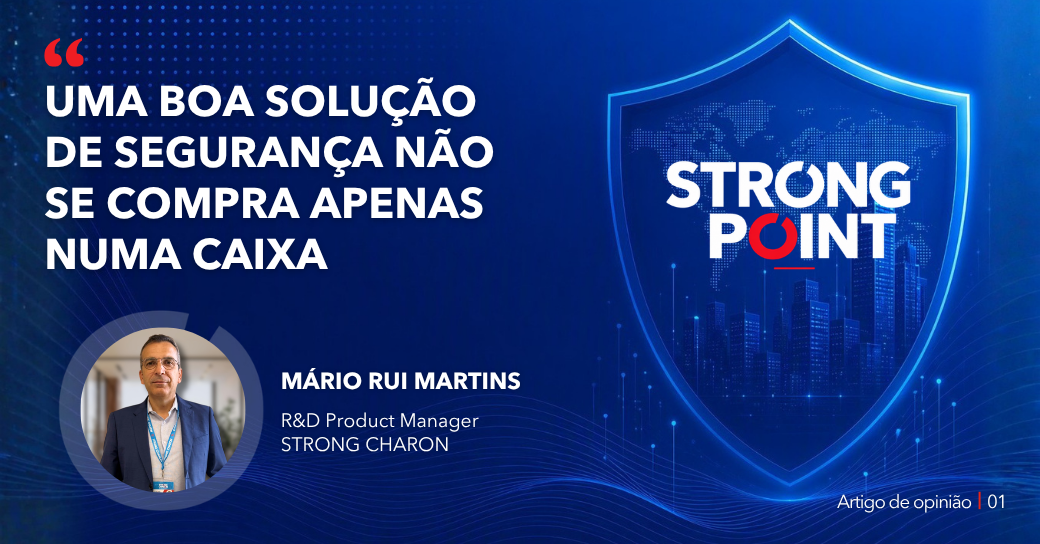
True value also lies in consulting, configuration, and the continuous improvement of the system.
When discussing the purchase of a security solution, the conversation tends to focus on the most visible and easily comparable elements: cameras, sensors, servers, controllers, software licenses, storage capacity, or available features.
That’s only natural. These are tangible components, with commercial specifications, prices, and technical data sheets. However, this approach to evaluating a solution can lead to a mistaken conclusion: assuming that the quality of the system depends, essentially, on the quality of the equipment purchased.
Experience shows precisely the opposite. A technically highly capable system can produce mediocre results when it is poorly configured, when the operating parameters have not been properly studied, or when the solution was delivered without a thorough period of fine-tuning in a real-world context. I have seen projects in which platforms of recognized quality were quickly deemed ineffective or even unsuitable. Upon closer analysis, the problem was not with the technology itself, but rather with how it had been configured and adapted to the client’s specific operations.
This distinction is important because a security system is not a standalone product. It is a set of technologies that must function within a specific operational context. Two customers can purchase exactly the same equipment and achieve completely different results. The location of the devices, sensitivity levels, alarm rules, response times, exceptions, user profiles, response workflows, integration between systems, and even the way operators work all directly influence the final performance.
For this reason, the initial configuration should not be viewed as a simple technical task performed at the end of the installation, but rather understood as an engineering and consulting phase. It is at this stage that the client’s needs are translated into concrete operating rules (and this translation is rarely perfect on the first try, because there are behaviors, exceptions, and operational needs that only become evident once the system actually begins to be used).
This is where one of the main points of tension in projects arises: the time spent on analysis, configuration, and monitoring comes at a cost. Often, this cost is harder to quantify than that of a camera, a server, or a license. The customer can see the equipment they are purchasing, but they cannot always anticipate the value of several hours of work by a technician or consultant analyzing events, reviewing parameters, testing scenarios, and fine-tuning the system. As a result, there is a tendency to cut back on this component of the project—precisely the one that can determine whether or not the technology investment will produce the expected results.
In my view, this approach needs to change. The implementation of a security solution should include three distinct phases: initial configuration, monitoring of the system’s behavior during operation, and progressive improvement. Once the system is up and running, it is important to analyze alarms, false positives, response times, operator usage, and any discrepancies between what was designed and what actually happens. With this information, the system should be fine-tuned until it aligns as closely as possible with the specific needs of the operation.
This process does not mean that the solution was installed incorrectly. On the contrary, it means recognizing that complex systems need to be adapted to reality. Just as a sophisticated operational process is not expected to reach its maximum efficiency on the first day, neither should a security platform be expected to achieve its best performance based solely on an initial configuration derived from design assumptions.
In several projects I’ve been involved with, this approach made all the difference. When the client allowed the technical team time to observe the system, understand how it operated, and adjust the parameters based on real data, the results improved significantly. In some cases, systems that were initially viewed as problematic or inadequate began to consistently meet expectations. It wasn’t a radical replacement of the technology; it was knowledge applied to the technology.
Here at Strong Charon, we have also encountered situations where the client’s trust in us to perform this additional analysis and fine-tuning has yielded benefits for both parties. For the client, this meant deriving greater value from the investment already made and obtaining a solution better aligned with their operations. For the integrator, it allowed for a better understanding of the actual environment, the correction of assumptions, and the delivery of a technically more robust result. In many of these cases, the difference lay not in supplying more equipment, but in dedicating more hours to consulting, configuration, and follow-up.
This is probably one of the least visible aspects of technological transformation in the security sector. As systems become smarter, more integrated, and more configurable, the importance of the knowledge needed to make them work properly also increases. Having more features does not guarantee better results. On the contrary, the greater a platform’s configurability, the greater the responsibility to configure it according to the context in which it will operate.
Therefore, when evaluating a security proposal, it may be necessary to look beyond simply asking what equipment, licenses, and features are included. There are other questions that are just as important: who will configure the system, how long is the fine-tuning expected to take, how will performance be monitored after the system goes live, what metrics will be analyzed, and who will be responsible for proposing improvements.
Ultimately, an effective security solution results from a combination of technology, expertise, and operations. High-quality equipment is essential, but it cannot compensate for improper configuration.
A good configuration is not an incidental cost of the project; it is an essential part of the investment, because it is what transforms technological capability into operational results. Sometimes, what appears to be a bad system is simply a good system that has not yet been properly understood, configured, and fine-tuned.
Click here to subscribe to the STRONG POINT newsletter, available on our LinkedIn page.
Mário Rui Martins – R&D Product Manager at Strong Charon